Posts

In Living Color

Image
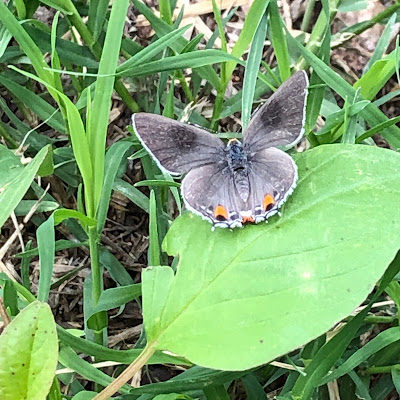
 This summer has been a magnificent feast for the eyes, with an abundance of butterflies and bees in my home garden as well as in the Pollinator Garden at the Arivaca Dancehall.  In the midst of 19 months of hard and dusty work on the dancehall project, the sight of all this natural beauty has refreshed and renewed my aching body and brain more times than I can count.  I am grateful to all the winged wonders that have crossed my path during that time, and in so doing have brought their living color into my life and lightened my load in every way.  Below are some of the "flying jewels" that I have managed to photograph and video during the last couple of months.   These are actually Queen butterflies at the Arivaca Library :)

What’s in a Name?

Image
Over the past few years, I have written about a wide variety of birds and other wildlife in my garden, some of who were named after specific individuals. For instance, Gambel’s Quail were named for William Gambel, a naturalist from Philadelphia who traveled to the southwest in the early 1840’s. He collected (killed and preserved) specimens of several “new” plants, birds, and reptile species, and shared them with colleagues in the eastern US.    Wildlife named after him include the Gambel’s Quail (Callipepia gambelii), the Mountain Chickadee (Parus gambeli), and a genus of southwest leopard lizards (Gambelia). Because the rules on “new species” nomenclature prohibit people from naming living things after themselves but give them the ability to name them after someone else, someone who liked or respected William Gambel chose those names. Hmmmm, what could be a problem with that?          This month’s article is an invitation to consider a few reasons ...

Lovely Lizards

Image
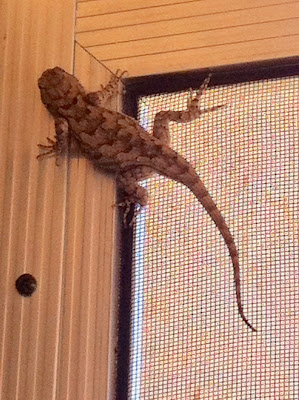
Any “fly on the wall” in my home garden or at the dancehall garden might be startled by hearing my sudden squeal of delight whenever I see a lizard… and I know for sure that the lizards are surprised and probably pretty frightened!   But I just can’t help it, because I love lizards.     During my first autumn in Arivaca, I went out to my studio one morning and there on my screen door was this good-size Ornate Tree Lizard.   What a welcome! And the longer I’ve lived around here, the more species of lizards I get to see, and I wish I had more time right now to research more about them all.   It’s definitely one of the things on my “nature to-do list” for when the dancehall is complete!   In the meantime, I am greatly enjoying watching them scramble around on and under the downed logs and rocks in my gardens, pump their chest up and down like a body-builder, freeze perfectly still on a tree trunk, or dart across my path.     ...

Grrrrrr....... Gophers!

Image
Pocket Gophers have been getting under my skin in a big way this spring!   They are gnawing their burrows through some of my vegetable garden beds, and escaping all our best attempts to dissuade or trap them.   They have been bold too, popping up out of their holes in broad daylight to look around for more crops to consume, and absolutely torturing our indoor cats who are now on constant “gopher watch”.   One by one over the past 2 weeks, my biggest chard plants have gone “down the hatch” as they cut and drag them into their burrows, sometimes right before our eyes (see video below).   My best watermelon starts are gone now too!   And I find sawed-off, wilted leaves and stems lying on the surface, with a gopher tunnel right under them.   Grrrrrrr!     "Gopher Watchcats" Eva and Tootsie But as I always say, the best way to outsmart any kind of “varmit” is to get to know them, so here goes:   Botta’s Pocket Gophers are the...

Snake Season

Image
  It’s been 6 years since we bought our home at the outskirts of Arivaca, and on April 20 th we saw a rattlesnake on the property for the first time.   I’d bet that some have passed through previously without our being around to notice, but this Western Diamondback appeared content to hang around a while.   It was coiled up peacefully in the shady bed beneath the Pine Tree, well-disguised in the wood chip mulch.         Pretty good camouflage, don't you think?     I think Western Diamondbacks are quite beautiful (admired from a distance), with their tiny Zorro mask, crisscross body pattern, and banded tail rattles.    When local rattlesnake “re-homing” expert R.D. Ayers arrived, his opinion was that our visitor was a 2-3 year old female approx. 30 inches long, that was very well fed and had recently shed her skin, so was especially attractive.                     This time o...

Puttin' on the Green

Image
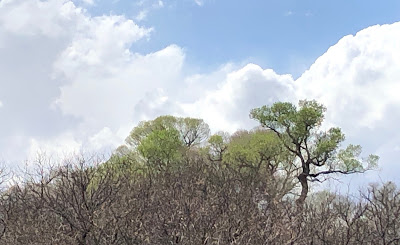
St. Patrick’s Day has always been one of my favorite holidays, but not just because of all the hearty toasting – ha ha!   I think it’s because: 1.      Green is my favorite color; 2.      It means that the equinox and start of spring is close at hand; 3.      I do have some Irish blood in me (amongst seven other nationalities that I know of).       Desert Lupin rosette of new leaves And at this time of year in Arivaca, the desert is also “puttin’ on the green” everywhere you look:   at the tops of the majestic Cottonwoods along the creek and the grasses at their feet, on the fuzzy rosettes of the desert lupins coming up through the path rocks, and the chartreuse shoots of spring veggie crops germinating in my garden.     Ahhh what a joyous sight!     Spinach seedlings                           Lettuce seedl...

A Beautiful Robe

Image
During the past year, our garden has hosted an increasing number of visits by a lovely little covey of Gambel’s Quail.    In the early morning, they come running up from the wash below our house, usually single file, and slip quickly through the fence gates to get to their favorite spots. Then for the next hour or so, they drink and dip in the birdbaths, forage for seeds below the feeders, and use their strong bills to turn over garden rocks to pluck ants from the ground. The scientific name for Gambel’s Quail is Callipepla gambelii, which comes from the Greek for “beautiful robe”.   And indeed, they are cloaked in a gorgeous array of feathers: both the male and female have a black crest that looks like a forward-facing comma, an elegant gray neck and back, striking chestnut-and-cream patches on their sides, and a cream-colored belly streaked with brown.   In addition, the male has a large black patch on his lower belly and his face, and a chestnut cap.   ...